
650 Harry Road.
Our flagship campus is the former IBM Almaden research site in San Jose — a purpose-built technical facility in the middle of Silicon Valley, under acquisition by Blackstart and being converted into high-density AI compute capacity. 25 MW is available now. The campus scales to 220 MW by 2028.
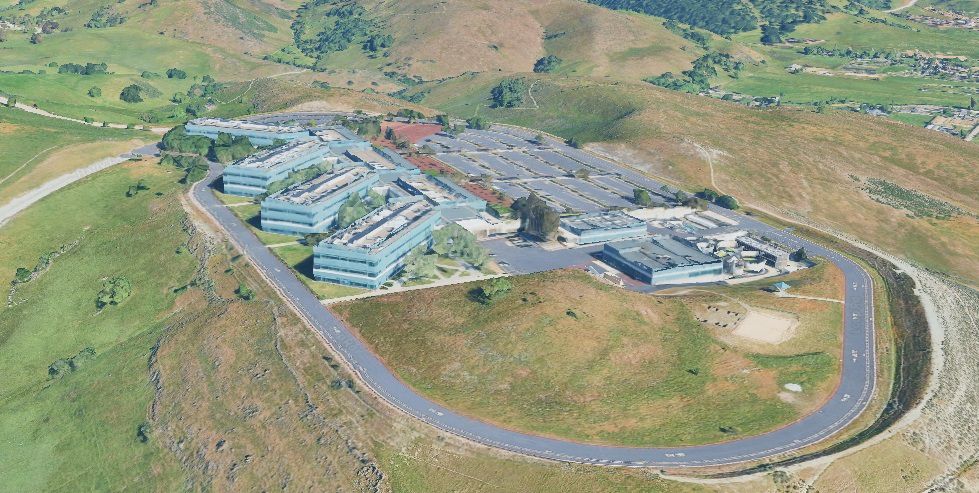
The former IBM Almaden research campus, sitting on the ridge above Silicon Valley.
An asset that was already built for this.
The hardest parts of a datacenter are the parts you cannot rush: energised power, fibre routes, structural capacity and a location worth being in. New sites wait years in interconnection queues to get them.
650 Harry Road already had them. IBM built the campus as a serious research facility, with the power service, the structural envelope, the cooling infrastructure and the network routes that heavy technical computing demands. We are acquiring the campus and converting it to modern high-density AI halls rather than starting from a field.
That is why we can offer live capacity in a market where most new supply is a 2029 promise.
- Location
- 650 Harry Road, San Jose, California
Silicon Valley, single-digit millisecond latency to the Bay Area - Heritage
- Former IBM Almaden research campus, built as a technical facility
- Available now
- 25 MW of live, contractable capacity
- Full buildout
- 220 MW across phased power blocks by 2028
- Model
- Operated end to end by Blackstart. No host operator, no landlord, no colocation middleman.
- Density
- High-density halls, liquid-ready, designed for current and next-generation accelerators
- Cooling
- Closed-loop, keeping site water consumption far below conventional datacenter operation
- Connectivity
- Carrier-dense fibre with route diversity into Bay Area network meeting points

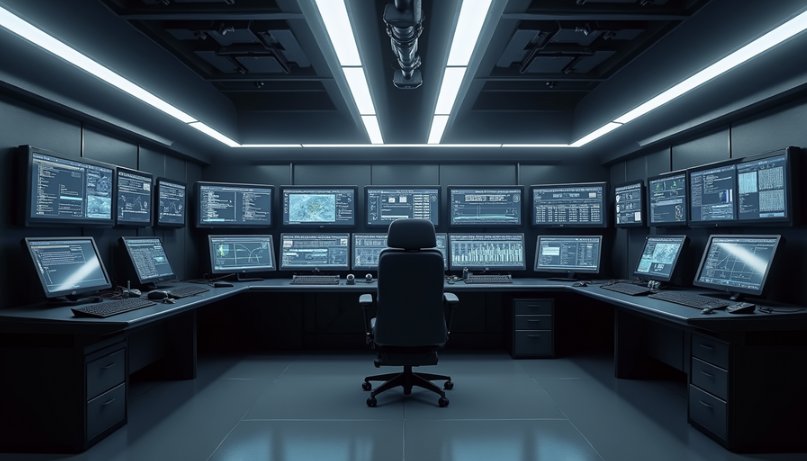
The aerial above shows the campus as it stands today. Interior imagery is representative of the conversion design. Photography of the commissioned halls is available under NDA to tenants in active discussion.

25 MW today. 220 MW by 2028.
Capacity is released in phased power blocks. Tenants who contract early hold a right of first refusal on the blocks that follow, so a workload that grows does not have to change provider to grow with it.
Phase dates reflect the current construction programme. Availability against a specific date is confirmed in writing as part of any capacity reservation.
The building is not a detail.
It is the single largest input into what your compute costs and how fast you can grow it. Here is what changes when the operator runs the building itself.
Power at source
We contract power directly for the campus. Your rate is built from our cost, not passed through a host operator’s margin and their utility agreement.
Expansion on our schedule
Adding a block is our construction programme, not an application to a landlord. Growth timelines are ours to commit to and ours to hit.
Density without negotiation
Halls are designed around the accelerators going into them. There is no host operator rack-density cap to argue with before you deploy.
Single chain of custody
One company controls physical access from the loading dock to the rack. For regulated tenants, that is a much shorter security review.
One escalation path
Facility and cloud are the same team. Nothing gets handed between two companies at three in the morning.
Reuse over rebuild
Converting a capable existing campus avoids the embodied carbon of new construction, and closed-loop cooling keeps site water use low.
Why Silicon Valley still wins.
Next to the users.
Inference is a latency business. Serving the Bay Area and the West Coast from San Jose puts you single-digit milliseconds from a dense concentration of customers, rather than routing across the country to reach them.
Real route diversity.
Carrier density in the South Bay means genuine physical path diversity into the network meeting points that matter, not two circuits sharing one trench.
Your team can drive there.
For dedicated and private tenancies, being able to walk the hall, inspect the deployment and meet the operations team in person is worth more than most remote-hands SLAs.
Come and see it.
Site visits are available for tenants in active discussion. Tell us what you need to run and we will arrange one.
Arrange a visit →