
Compute, sold four ways.
Every tier below runs on the same infrastructure in San Jose, on the same network, under the same operations team. Moving between them is a contract change, not a migration.
Accelerators on your terms, not a three-year capex cycle.
Reserve GPU capacity for an afternoon or for three years. You get the accelerator, the interconnect and the storage attached to it, provisioned in our halls and billed against a rate that falls as your commitment lengthens.
Buying GPUs outright is a bad fit for most roadmaps. Lead times are long, the generation you buy is the generation you keep, and a cluster sized for your peak sits idle the rest of the year. Leasing time on someone else’s hardware solves that, provided the hardware is actually good and the operator is actually accountable.
Blackstart operates the accelerators and the facility they sit in. There is no hosting provider in the middle, so the price you are quoted reflects our cost of power and capital rather than a stack of margins.
Terms. On-demand for exploratory work. Monthly reserved for steady development. Annual and multi-year committed use for production, with the lowest effective rate and a guaranteed capacity reservation against the campus roadmap.
No egress penalties. Data movement is priced as bandwidth, not as a retention mechanism.
| Option | Best for |
|---|---|
| Bare metal | Maximum performance and full control. No hypervisor between your code and the accelerator. Training, HPC, tightly coupled parallel work. |
| Virtual machines | Configurable, rapidly deployed environments for development, testing and production serving where isolation matters more than the last few percent. |
| Containers | Fast provisioning and consistent environments for teams already running an orchestrated pipeline. Scales down as cleanly as it scales up. |
| S3-compatible storage | High-throughput object storage co-located with compute, so your dataset does not cross a paid boundary to reach the GPU. |
Current fleet composition, accelerator generations and available quantities are shared on request — they move as blocks energise. Tell us the workload and we will confirm what is live and what is scheduled.
Your own environment, inside our building.
Some workloads cannot share. Mission-critical financial modelling, patient data, classified research, or simply a training run that cannot tolerate a neighbour’s job competing for the same fabric.
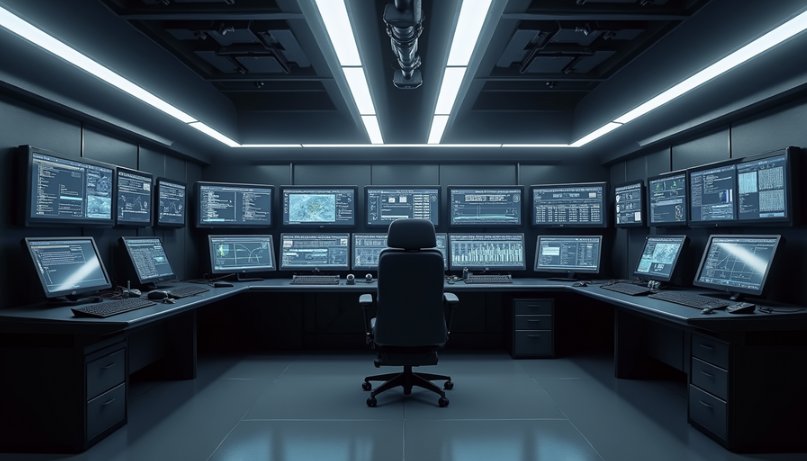
Physical isolation, not logical isolation. Dedicated hardware in a defined footprint, on a network segment that is yours, with storage that no other tenant touches. Access to the cage is controlled and logged to a named list you approve.
Single-operator custody. Because we run the facility ourselves, the chain of custody from the loading dock to the rack is one company’s responsibility. For enterprise diligence and public-sector procurement, that is a materially shorter questionnaire than a colocated provider can offer.
Connectivity to what you already run. Private interconnect into your existing estate, whether that is another datacenter, an office, or a public-cloud region you are not leaving yet. Hybrid is the normal case, not the exception.
Sized to the workload. A private environment starts at a few racks and goes up to its own power block. The commercial model is the same at either end.
| Layer | What you get |
|---|---|
| Compute | Dedicated accelerators and hosts, reserved to your account for the contract term. |
| Network | Isolated segment, dedicated uplinks, private interconnect to your other sites. |
| Storage | Dedicated high-throughput parallel file system and object tier, physically separate from shared capacity. |
| Physical | Cage or dedicated hall, access control to an approved list, camera coverage and entry logging. |
| Operations | Named operations contact, agreed maintenance windows, uptime reporting against contracted targets. |
| Evidence | Documentation pack for audit, security review and customer diligence. |
Start in minutes. Pay for what runs.
Shared GPU capacity with API and console provisioning, aimed at the part of the work that is unpredictable: experiments, evaluations, short fine-tunes, and demand you did not forecast.
API-first. Provision, scale and tear down programmatically so GPU capacity fits inside your existing pipeline rather than beside it. The console exists for the times you want to look at something rather than script it.
Ready-made environments. Start from a clean image and build your own, or launch straight into a configured stack so the first hour goes into the model rather than into CUDA versions.
One path upward. Public capacity runs in the same halls, on the same network, as private and reserved capacity. When a workload outgrows shared tenancy, it moves without changing region, provider or data location.
| Image | What it gives you |
|---|---|
| Clean base | No preinstalled framework. Build your environment from the ground up. |
| PyTorch + JupyterHub | A fully configured notebook environment, ready for development on first boot. |
| Docker & NVIDIA Container Toolkit | Containerised deployment with GPU passthrough using standard tooling. |
| Inference server | Optimised serving stack for production endpoints and lightweight local models. |
| Open-weight model images | Current open-weight models preloaded so evaluation starts immediately. |
Built to order, on its own power block.
When the run is measured in weeks and the fabric matters as much as the accelerators, a shared environment stops being the right shape. We design, build, energise and operate the cluster as a single project.
Designed with you, not sold to you. Accelerator count, topology, storage throughput, checkpoint strategy and power envelope are worked out against your actual training plan before anything is ordered.
Non-blocking by design. A supercluster is only as good as its slowest hop. Fabrics are built so that collective operations across the full node count do not fall off a cliff, with storage sized to keep every accelerator fed through checkpointing.
Our schedule, not a queue. This is where running our own campus changes the answer. Energising a new block is our own construction programme. We are not applying to a landlord for a power upgrade or waiting behind other tenants in a host operator’s fit-out plan.
Operated by the people who built it. The team that commissions the cluster is the team on site afterwards. Uptime reporting, maintenance windows and escalation all sit with one company.

| Parameter | Approach |
|---|---|
| Scale | Sized to the training plan, from a few hundred accelerators to a full dedicated power block. |
| Interconnect | High-bandwidth, low-latency, non-blocking topology across the full node count. |
| Storage | Parallel file system sized for sustained checkpoint throughput, plus an object tier for datasets. |
| Cooling | Liquid-ready high-density halls, closed-loop, matched to the accelerator generation deployed. |
| Power | Dedicated block with reserved headroom for the next phase of the same tenancy. |
Tell us the workload. We’ll size it.
Accelerator count, run length, storage throughput and live date is enough for a first quote.
Request capacity →